
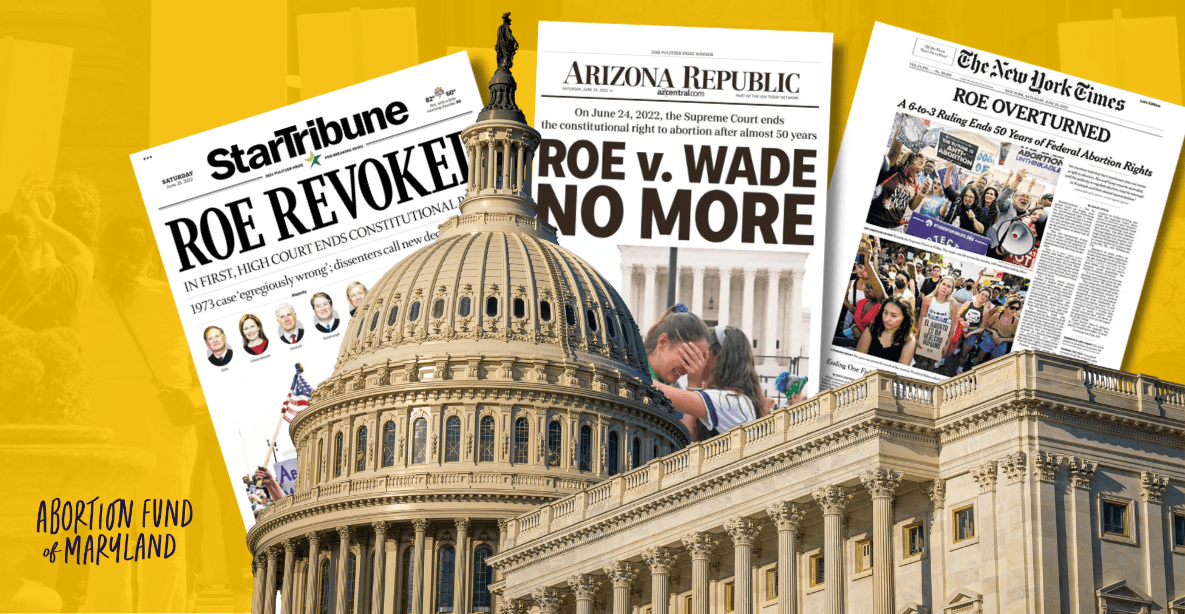
More than four years after the Supreme Court overturned Roe v. Wade, abortion access in the United States continues to evolve. While new barriers have emerged, so have new ways of helping people access the care they need. Understanding both the challenges and the opportunities is essential to building a future where everyone can make decisions about their own reproductive health.
One of the biggest shifts since Dobbs has been how people access abortion care. Although many patients still travel across state lines, the number of people doing so has declined from its peak in 2023. A major reason is the rapid expansion of telehealth, which has become a lifeline for people who may have difficulty traveling, or those living in states with abortion bans.
Also, according to the Center for Repro Rights, 18 states—including Maryland—and the District of Columbia currently have shield laws that protect providers who offer medication abortion across state lines, allowing thousands of patients to access care without traveling hundreds of miles.
However, telehealth is not a solution for everyone. Patients who are further along in pregnancy or have more complex medical needs often require in-person care. That makes states like Maryland especially important. We remain one of the country’s key access points for abortion care, including later abortion services that are available in only a handful of clinics nationwide.
At the same time, the movement for abortion access is still facing significant challenges.
Medication abortion remains under attack through ongoing legal and political efforts targeting mifepristone, even though it is used in nearly two-thirds of abortions in the United States. Patients, providers, and those who support them also face growing risks from efforts to criminalize abortion and other pregnancy outcomes.
Economic barriers are making access even harder. The rising cost of housing, transportation, childcare, healthcare, and insurance mean that more people need financial assistance just to reach an appointment. Yet many abortion funds—the organizations that help cover these costs—are themselves struggling with funding shortages and even closures, impacting a critical national support system that was already weak.
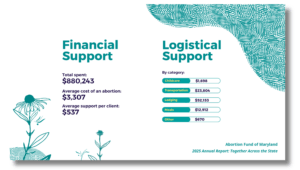
The Abortion Fund of Maryland provides financial and logistical support to people living in or traveling to Maryland who are seeking abortion care.